
Create a Wallet
Understand wallets, addresses and recovery information before creating one.
Learn more →A multi-chain wallet, blockchain network and Web3 knowledge hub from imtoken
Use one clear hub to understand multi-chain assets, network selection, receiving and sending, DApp connections, signatures, approvals, blockchain concepts and wallet security. Every on-chain action should begin with a review of the address, network, permissions and request details.
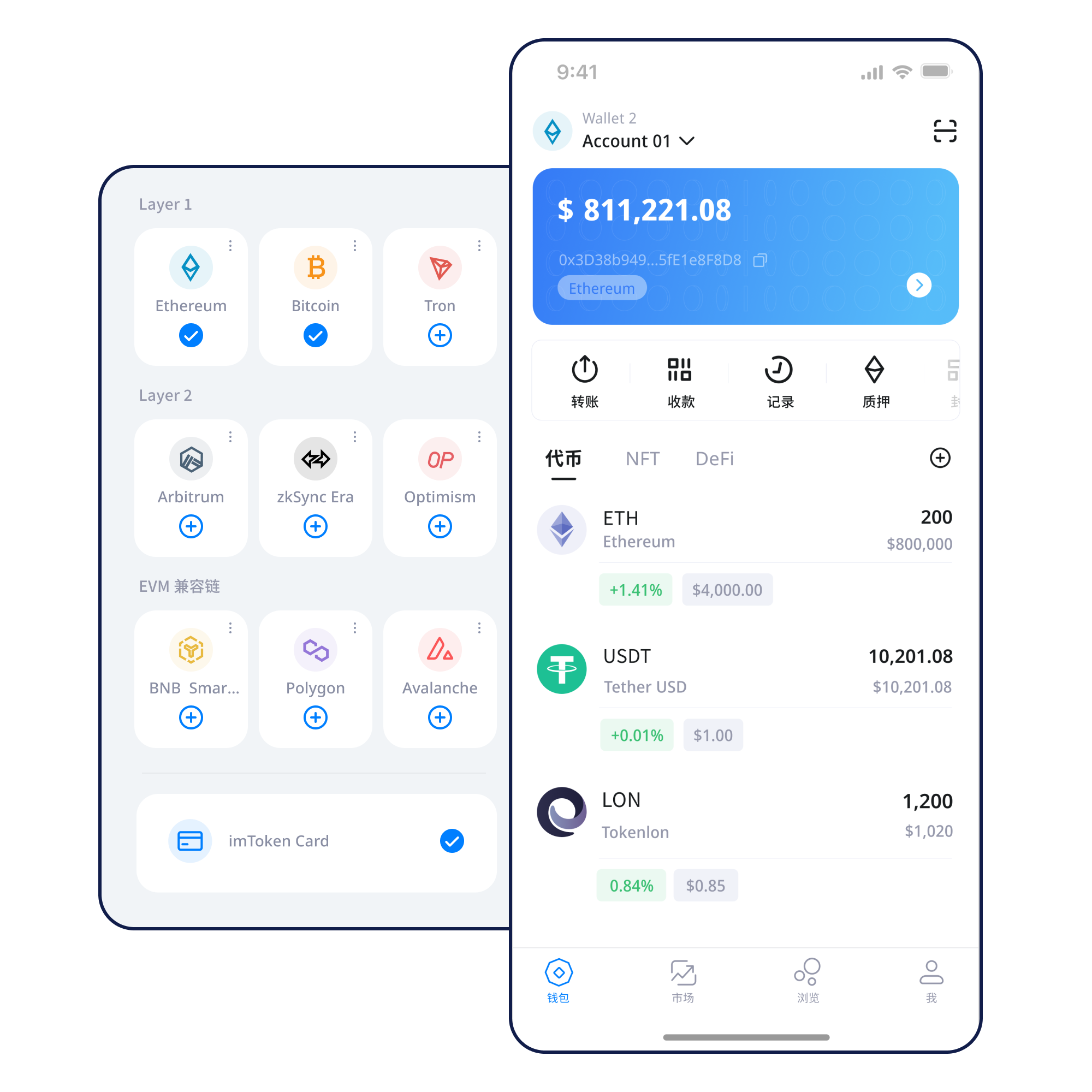
Understand wallets, addresses and recovery information before creating one.
Learn more →Keep your seed phrase offline and never send recovery information to anyone.
Learn more →Verify the receiving address, network and asset before sharing an address.
Learn more →Review the address, network, amount, gas and token before confirming.
Learn more →Check the domain, account request, signature and approval scope.
Learn more →Asset display depends on the active network, address and token contract. Recheck assets, gas assets and transaction status when switching networks.
Verify address and network when receiving, then review amount, gas, token details and transaction hash when sending.
View assets, networks and transaction history on mobile, and review each DApp request individually.
Browser connections should make the account, network and permission scope clear. Disconnect unused connections and review any permissions that remain.
Keep seed phrases and private keys under your control, prefer offline backups, and never send recovery information to another person.
See how one wallet can connect to different networks and why parameters must be rechecked when switching.
Explore network knowledge →Understand the role of nodes, blocks, transactions and confirmations.
Explore network knowledge →
Learn addresses, gas, contracts, tokens and approvals on EVM-compatible networks.
Explore network knowledge →
Understand relationships with base networks, bridges, cross-layer transfers and arrival checks.
Explore network knowledge →
See how fee estimates, block inclusion, confirmation depth and congestion affect transactions.
Explore network knowledge →Enter the official download flow after an intentional click; the site does not auto-download.
Before creating or importing, understand what recovery information controls and how it should be protected.
Keep the seed phrase offline. Do not screenshot it, send it to another person or give it to someone claiming to be support.
Confirm the network, address and asset match; similar address formats do not mean two networks are the same.
Review the address, network, amount and gas. For higher-value actions, consider validating the workflow with a smaller scope first.
Use the transaction hash to review on-chain status, and periodically remove DApp approvals you no longer need.
A DApp may request account access, a network switch, a message signature, a transaction signature or a token approval. Do not treat an existing connection as automatic consent to later requests.
Review the source, network, account and permissions at each step; a connection is not blanket consent for later requests.
Review the source, network, account and permissions at each step; a connection is not blanket consent for later requests.
Review the source, network, account and permissions at each step; a connection is not blanket consent for later requests.
Review the source, network, account and permissions at each step; a connection is not blanket consent for later requests.
Review the source, network, account and permissions at each step; a connection is not blanket consent for later requests.
Review the source, network, account and permissions at each step; a connection is not blanket consent for later requests.
Review the source, network, account and permissions at each step; a connection is not blanket consent for later requests.
Wallet security goes beyond a single warning about private keys. It requires ongoing checks of seed phrase storage, DApp spenders, signature origins, device conditions, networks and recipient addresses. On-chain transactions generally cannot be reversed by a wallet alone, so preventive verification is more reliable than recovery after a mistake. Use public devices and networks cautiously, and treat any request for a seed phrase, private key or verification code as high risk.
Open the Security Center →Start with addresses, then learn seed phrases, private keys, networks, gas, transaction hashes, DApps and approvals. The sequence matters: understand who controls the account, where a transaction is executed and what confirmation creates before moving into more complex contract interactions.
Read the getting-started guide →Understand nodes, blocks, transactions and confirmation.
Learn addresses, gas, tokens and approvals.
Understand base-layer relationships and cross-layer transfers.
Review spenders, allowances and revocation.
Build practical everyday security habits.
Look up common on-chain terms quickly.
Learn Ethereum PoS, validators, reward sources, network status, withdrawals and exits. Rewards are not fixed and are not guaranteed.
Read staking basics →Exits may involve waiting periods, validators may face protocol penalties, smart contracts carry technical risk, and digital asset prices can fluctuate. Third-party services can add another layer of risk.
Learn PoS & validators →The site uses one download entry so the user initiates the download flow intentionally.
Recheck assets, addresses, gas and contract details whenever you switch networks.
imtoken official staff will never ask for your seed phrase, private key or verification code.
Before staking, understand exit waiting periods, protocol penalties, contract risk and market volatility.
A wallet address is a public identifier used to receive on-chain assets. Before sending, verify the network, asset and full address rather than relying only on a few visible characters.
Both can represent control over wallet accounts. A seed phrase commonly derives or restores accounts, while a private key usually signs for a specific account. Neither should be sent to another person.
It is safer not to. Screenshots, photo sync and cloud storage increase exposure. Prefer an offline backup that is stored securely and separately from everyday connected devices.
Many EVM-compatible networks use the same address format, but their assets and network states are separate. Always verify the network, chain parameters and token contract.
Gas measures the computational resources needed for an on-chain operation. Fees depend on network rules and congestion, so wallet estimates can change as network conditions change.
A transaction hash is a unique identifier that can be checked on a suitable block explorer to review status, block inclusion, confirmations and interaction details.
Once an on-chain transaction is confirmed, a wallet generally cannot reverse it unilaterally. Recovery options depend on the recipient, network and asset, making pre-transfer checks essential.
All download buttons use the same download entry. Before transferring, signing or approving, verify the address, network, amount and request details.